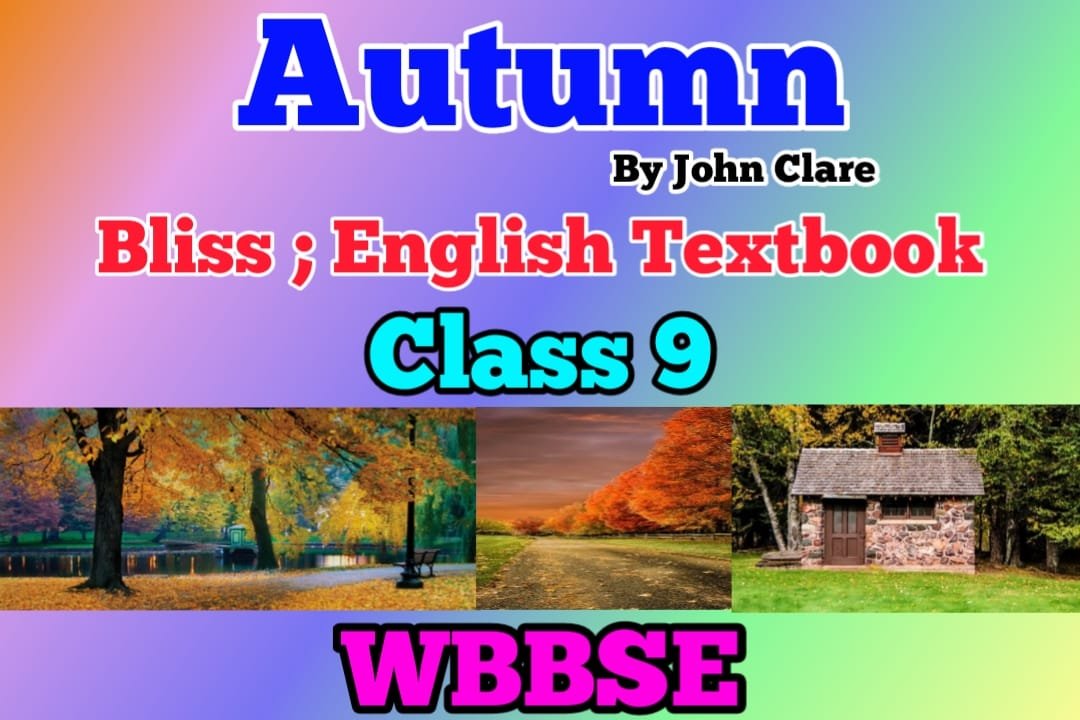
Autumn by John Clare Class 9 questions and answers have been carefully arranged with word notes, Bengali meanings, and extra important questions and answers taken from different previous WBBSE question papers.
The poem Autumn, written by John Clare, is included in the Class 9 syllabus of Bliss: English Textbook for Class IX under WBBSE. This study material helps students understand the poem easily and prepares them to score better marks in examinations.
About the Poet:
John Clare (1793–1864) was an English poet famous for his celebratory representations of the English countryside and his lamentation of its disruption.
উচ্চারণ: জন ক্লেয়ার (১৭৯৩–১৮৬৪) ওয়াজ অ্যান ইংলিশ পোয়েট ফেমাস ফর হিজ সেলিব্রেটরি রিপ্রেজেন্টেশন্স অফ দ্য ইংলিশ কান্ট্রিসাইড অ্যান্ড হিজ ল্যামেন্টেশন অফ ইটস ডিসরাপশন।
অর্থ: জন ক্লেয়ার ছিলেন একজন ইংরেজ কবি, যিনি ইংল্যান্ডের গ্রামাঞ্চলের সৌন্দর্যকে উদ্যাপন করার জন্য এবং সেই গ্রামজীবন নষ্ট হয়ে যাওয়ার দুঃখ প্রকাশের জন্য বিখ্যাত।
Some of his notable collections of poetry are First Love, Snow Storm, The Village Minstrel and Other Poems etc.
উচ্চারণ: সাম অফ হিজ নোটেবল কালেকশনস অফ পোয়েট্রি আর ফার্স্ট লাভ, স্নো স্টর্ম, দ্য ভিলেজ মিনস্ট্রেল অ্যান্ড আদার পোয়েমস ইটসেটেরা।
অর্থ: তাঁর উল্লেখযোগ্য কাব্যগ্রন্থগুলোর মধ্যে রয়েছে First Love, Snow Storm, The Village Minstrel and Other Poems ইত্যাদি।

About the Poem:
The following poem presents a pen-picture of the mellow beauty of autumn in the countryside.
উচ্চারণ: দ্য ফলোয়িং পোয়েম প্রেজেন্টস আ পেন-পিকচার অফ দ্য মেলো বিউটি অফ অটাম ইন দ্য কান্ট্রিসাইড।
অর্থ: নিচের কবিতাটি গ্রামাঞ্চলে শরৎ ঋতুর স্নিগ্ধ ও কোমল সৌন্দর্যের একটি শব্দচিত্র তুলে ধরেছে।
As this season comes just before winter, it is characterized by falling leaves, bare branches, and strong winds.
উচ্চারণ: অ্যাজ দিস সিজন কামস জাস্ট বিফোর উইন্টার, ইট ইজ ক্যারেক্টারাইজড বাই ফলিং লিভস, বেয়ার ব্রাঞ্চেস, অ্যান্ড স্ট্রং উইন্ডস।
অর্থ: যেহেতু এই ঋতুটি শীতের ঠিক আগে আসে, তাই এই সময়ে পাতা ঝরা, পাতা-শূন্য ডালপালা ও প্রবল বাতাসই এর প্রধান বৈশিষ্ট্য।
Autumn Text Bengali Meaning, Word Notes, and Summary
Stanza 1
I love the fitful gust that shakes
উচ্চারণ: আই লাভ দ্য ফিটফুল গাস্ট দ্যাট শেকস
অর্থ: আমি অনিয়মিত দমকা বাতাসকে ভালোবাসি
The casement all day,
উচ্চারণ: দ্য কেসমেন্ট অল ডে,
অর্থ:যা লম্বা জানলাগুলোকে নাড়ায় সারাদিন,
And from the mossy elm-tree takes
উচ্চারণ: অ্যান্ড ফ্রম দ্য মসি এলম্-ট্রি টেকস
অর্থ: শ্যাওলা ঢাকা এলম-গাছগুলো থেকে
The faded leaves away,
উচ্চারণ: দ্য ফেডেড লিভস্ অ্যাওয়ে,
অর্থ: রংচটা পাতাগুলোকে ঝরিয়ে দেয়,
Twirling them by the window pane
উচ্চারণ: টোয়ারলিং দেম বাই দ্য উইনডো পেন।
অর্থ: জানলার শার্সির গায়ে ঘোরাতে ঘোরাতে
With thousand others down the lane.
উচ্চারণ: উইথ থাউজ্যান্ড আদারস ডাউন দ্য লেন।
অর্থ: হাজারটা পাতা ফেলে গলিতে।
Word Meaning:
fitful : irregular, sudden : অনিয়মিত, হঠাৎ হঠাৎ হওয়া
gust : strong blast of wind : দমকা বাতাস
shakes : trembles, moves violently : কাঁপায়, নাড়ায়
casement : window frame : জানালার কাঠামো / জানলা
mossy : covered with moss : শ্যাওলা ঢাকা
elm-tree : a type of large tree : এলম জাতের গাছ
faded : pale, dried : রংচটা, বিবর্ণ
leaves : foliage : পাতা
twirling : spinning, whirling : ঘুরতে ঘুরতে উড়ানো
window pane : glass of a window : জানালার কাচ
lane : narrow road : সরু রাস্তা / গলি
Summary: The poet loves the sudden, irregular gusts of wind. These winds shake the windows throughout the day. They blow away the faded leaves from the moss-covered elm trees. The leaves are lifted and spun around near the window panes. Along with many others, the leaves are carried down the lane. Through this scene, the poet shows a lively and energetic picture of nature in motion.
(কবি হঠাৎ হঠাৎ আসা অনিয়মিত দমকা বাতাসকে ভালোবাসেন। এই বাতাস সারাদিন ধরে জানালাগুলো কাঁপিয়ে তোলে। শ্যাওলা ঢাকা এলম গাছ থেকে বাতাস শুকিয়ে যাওয়া, রংচটা পাতাগুলো উড়িয়ে নিয়ে যায়। পাতাগুলো জানালার কাঁচের পাশে ঘুরতে ঘুরতে উড়ে বেড়ায়। অন্য অনেক পাতার সঙ্গে সেগুলো গলির দিকে বয়ে যায়। এই দৃশ্যের মাধ্যমে কবি প্রকৃতির প্রাণবন্ত ও শক্তিতে ভরা গতিশীল রূপটি তুলে ধরেছেন।)
Stanza 2
I love to see the shaking twig
উচ্চারণ: আই লাভ টু সি দ্য শেকিং টুইগ
অর্থ: আমি দেখতে ভালোবাসি কেঁপে যাওয়া ডালগুলি
Dance till the shut of eve
উচ্চারণ: ডানস টিল দ্য শাট অফ ইভ
অর্থ: যারা সন্ধের শেষের আগে অব্দি নাচতে থাকে।
The sparrow on the cottage rig.
উচ্চারণ: দ্য স্প্যারো অন দ্য কটেজ রিগ,
অর্থ: কুটিরের দড়িতে বসে থাকা চড়াই,
Whose chirp would make believe
উচ্চারণ: হুজ চারপ্ উড মেক বিলিভ
অর্থ: যাদের কিচিরমিচির আমাদের মনে করায়
That spring was just now flirting by
উচ্চারণ: দ্যাট স্প্রিং ওয়াজ জাস্ট নাউ ফ্লারটিং বাই
অর্থ: যেন বসন্ত এখুনি মজা করে চলে গেল
In summer’s lap with flowers to lie.
উচ্চারণ: ইন সামারস্ ল্যাপ উইদ ফ্লাওয়ারস্ টু লাই।
অর্থ: ফুলেদের সাথে গ্রীষ্মের কোলে শুতে।
Word Meaning:
shaking : trembling, quivering : কাঁপতে থাকা
twig : small branch : ছোট ডাল
dance : move rhythmically : নাচা
eve : evening : সন্ধ্যা
sparrow : small brown bird : চড়ুই পাখি
cottage : small house : কুটির
rig : roof / beam : ছাদ / কুটিরের কাঠামো
chirp : twitter, bird song : কিচিরমিচির শব্দ
spring : season of flowers : বসন্ত ঋতু
flirting : playing lightly : খুনসুটি করা / হালকা মজা করা
lap : bosom : কোলে
flowers : blossoms : ফুল
Summary: The poet loves to watch the small branches shaking in the wind. They seem to dance happily till evening comes. He notices a sparrow sitting on the cottage roof. The sparrow’s cheerful chirping creates a joyful feeling. Its song makes it seem as if spring has returned for a moment. Spring appears to be playing happily in the lap of summer among flowers.
(কবি বাতাসে কাঁপতে থাকা ছোট ছোট ডালপালা দেখতে খুব ভালোবাসেন। সেগুলো যেন সন্ধ্যা নামা পর্যন্ত আনন্দে নেচে চলেছে বলে মনে হয়। তিনি কুটিরের ছাদের উপর বসে থাকা একটি চড়ুই পাখির দিকেও লক্ষ্য করেন। চড়ুইটির আনন্দময় কিচিরমিচির শব্দ কবির মনকে আনন্দে ভরিয়ে তোলে। তার গান শুনে মনে হয়, যেন এক মুহূর্তের জন্য বসন্ত আবার ফিরে এসেছে। বসন্তকে মনে হয় ফুলে ভরা গ্রীষ্মের কোলে আনন্দে খেলছে।)
Stanza 3
I love to see the cottage smoke
উচ্চারণ: আই লাভ টু সি দ্য কটেজ স্মোক
অর্থ: আমি দেখতে ভালোবাসি কুটিরের ধোঁয়া
Curl upwards through the naked trees,
উচ্চারণ: কার্ল আপওয়ার্ডস থ্রু দ্য নেকেড ট্রিজ,
অর্থ: যা শূন্য গাছের ফাঁক দিয়ে পাকিয়ে ওপরে ওঠে,
The pigeons nestled round the cote
উচ্চারণ: দ্য পিজিয়ম্স নেসলড্ রাউন্ড দ্য কোট
অর্থ: পায়রাগুলো তাদের বাসায় শান্তিতে থাকে
On dull November days like these:
উচ্চারণ: অন ডাল নভেম্বর ডেজ লাইক দীজ:
অর্থ: এইরকম বিষণ্ণ নভেম্বরের দিনগুলোয়।
The cock upon the dung-hill crowing,
উচ্চারণ: দ্য কক আপন দ্য ডাং-হিল ক্লোয়িং,
অর্থ: মলের স্তূপের ওপর বসে মোরগ ডেকে চলে,
The mill sails on the heath a-going.
উচ্চারণ: দ্য মিল সেইলস অন দ্য হীথ এ-গোয়িং।
অর্থ: ঘাসে ভরা মাঠে কলটা চলতে থাকে।
Word Meaning:
cottage : small house : কুটির
smoke : vapour, fumes : ধোঁয়া
curl : coil, twist : পাক খাওয়া
upwards : skyward : উপরের দিকে
naked : bare, leafless : পাতা-শূন্য
pigeons : doves : পায়রা
nestled : settled comfortably : গা-ঘেঁষে আরামে বসে থাকা
cote : shelter, bird-house : পাখির বাসা / খোঁয়াড়
dull : gloomy, lifeless : নিরানন্দ, বিষণ্ণ
November : late autumn month : নভেম্বর মাস
cock : rooster : মোরগ
dung-hill : heap of manure : গোবরের ঢিবি
crowing : calling loudly : ডাকা / ডেকে ওঠা
mill : grinding machine : কল
sails : blades, wings : পাখা
heath : open grassy land : ঘাসে ভরা খোলা মাঠ
Summary: The poet loves to see smoke rising from the cottage chimney. The smoke curls upward through the bare trees. He also enjoys watching pigeons resting together around the cote. These peaceful scenes appear on dull November days. The crowing cock adds life to the quiet countryside. The moving sails of the mill show that village life goes on steadily.
(কবি কুটিরের চিমনি থেকে ধোঁয়া উঠতে দেখতে ভালোবাসেন। সেই ধোঁয়া পাতা-হীন গাছগুলোর ফাঁক দিয়ে পাক খেতে খেতে উপরের দিকে উঠে যায়। খোঁয়াড়ের চারপাশে একসঙ্গে গা ঘেঁষে বসে থাকা পায়রাগুলোকেও তিনি উপভোগ করে দেখেন। নিরানন্দ, মলিন নভেম্বরের দিনগুলোতেই এমন শান্ত দৃশ্য দেখা যায়। নীরব গ্রামবাংলায় মোরগের ডাক নতুন প্রাণের সঞ্চার করে। ঘুরতে থাকা কলের পাখাগুলো দেখিয়ে দেয় যে গ্রাম্য জীবন নীরবে কিন্তু নিয়মিতভাবে চলতে থাকে।)
Stanza 4
The feather from the raven’s breast
উচ্চারণ: দ্য ফেদার ফ্রম দ্য র্যাভেনস্ ব্রেস্ট
অর্থ: দাঁড়কাকের বুক থেকে একটা পালক
Falls on the stubble lea,
উচ্চারণ: ফলস অন দ্য স্টাবল লি,
অর্থ: পড়ে যায় ঘাসের গোড়ায়,
The acorns near the old crow’s nest
উচ্চারণ: দি অ্যাকর্নস নিয়ার দি ওলড্ ক্লো’স্ নেস্ট
অর্থ: পুরনো একটা কাকের বাসার কাছ থেকে ওক ফল
Fall pattering down the tree:
উচ্চারণ: ফল প্যাটারিং ডাউন দ্য ট্রি:
অর্থ: টুপটাপ গাছের নীচে ঝরে পড়ে:
The grunting pigs, that wait for all,
উচ্চারণ: দ্য গ্রান্টিং পিস, দ্যাট ওয়েট ফর অল,
অর্থ: ঘোঁৎ ঘোঁৎ করে শুয়োরগুলি অপেক্ষায় থাকে,
Scramble and hurry where they fall.
উচ্চারণ: স্ক্র্যাম্বল অ্যান্ড হারি হোয়্যার দে ফল।
অর্থ: ওগুলো পড়ার জায়গায় হুড়োহুড়ি আর কাড়াকাড়ি করে।
Word Meaning:
feather : plume : পালক
raven : large black bird : দাঁড়কাক
breast : chest : বুক
stubble : short dry grass : কাটা খড়ের গোড়া / খেতের অবশিষ্ট ঘাস
lea : meadow, field : মাঠ
acorns : oak nuts : ওক গাছের ফল
crow : black bird : কাক
nest : home of birds : পাখির বাসা
pattering : tapping softly : টুপটাপ শব্দে পড়া
grunting : making low sound : ঘোঁৎ ঘোঁৎ শব্দ করা
pigs : swine : শুয়োর
scramble : rush, struggle : হুড়োহুড়ি করা / কাড়াকাড়ি করা
hurry : move quickly : তাড়াতাড়ি ছোটা
Summary: A black feather from a raven falls onto the empty field. Acorns drop from the tree near the old crow’s nest. They fall with a soft, pattering sound. Pigs waiting below notice the falling acorns. The pigs rush eagerly toward them. This scene shows lively movement in the countryside.
(একটি দাঁড়কাকের বুকের কালো পালক খোলা, ফাঁকা মাঠের উপর পড়ে। পুরোনো কাকের বাসার কাছে গাছ থেকে একরনের ফল ঝরে পড়ে। ফলগুলো টুপটাপ শব্দ করে নিচে পড়তে থাকে। নিচে অপেক্ষা করা শূকরগুলো পড়তে থাকা ফলগুলো লক্ষ করে। শূকরগুলো লোভে ও আগ্রহে সেদিকে ছুটে যায়। এই দৃশ্য গ্রামাঞ্চলের প্রাণবন্ত ও সজীব চলাচলকে ফুটিয়ে তোলে।)


Textual questions:
Exercise 1
Tick (✓) the correct answer from the given alternatives (নিচে দেওয়া বিকল্পগুলির মধ্য থেকে সঠিক উত্তরটি টিক চিহ্ন দাও)
1. All through the day the fitful gust shakes the (সারাদিন ধরে অনিয়মিত দমকা বাতাস কাঁপিয়ে তোলে—)
(a) window-pane (জানালার কাচ)
(b) curtains (পর্দা)
(c) casement (জানালার কাঠামো / জানলা)
(d) door (দরজা)
Ans: (c) casement (জানালার কাঠামো / জানলা)
2. The poet loves to see the shaking twig dance till the (কবি কাঁপতে থাকা ডালপালাকে নাচতে দেখতে ভালোবাসেন—)
(a) coming of dawn (ভোর আসা পর্যন্ত)
(b) end of night (রাতের শেষ পর্যন্ত)
(c) end of afternoon (বিকেলের শেষ পর্যন্ত)
(d) shut of eve (সন্ধ্যা নামা পর্যন্ত)
Ans: (d) shut of eve (সন্ধ্যা নামা পর্যন্ত)
3. The sparrow sat on the (চড়ুই পাখিটি বসেছিল—)
(a) cottage rig (কুটিরের ছাদের কাঠামো / দড়ি)
(b) house-top (বাড়ির ছাদ)
(c) mossy elm-tree (শ্যাওলা ঢাকা এলম গাছ)
(d) casement (জানলা)
Ans: (a) cottage rig (কুটিরের ছাদের কাঠামো / দড়ি
4. The pigeons nestled round the (পায়রাগুলো গা-ঘেঁষে বসে ছিল—)
(a) cage (খাঁচা)
(b) cote (পায়রার বাসা / খোঁয়াড়)
(c) branch (ডাল)
(d) heath (খোলা ঘাসে ভরা মাঠ)
Ans: (b) cote (পায়রার বাসা / খোঁয়াড়
5. The cock was crowing upon the (মোরগটি ডেকে চলেছিল—)
(a) dunghill (গোবরের ঢিবি)
(b) lea (ঘাসে ভরা মাঠ)
(c) tree tops (গাছের চূড়া)
(d) mill-sails (কলের পাখা)
Ans: (a) dunghill (গোবরের ঢিবি)
6. The grunting pigs (ঘোঁৎ ঘোঁৎ করা শুয়োরগুলো—)
(a) walk slowly (ধীরে হাঁটে)
(b) scamper by (দৌড়ে পালায়)
(c) scramble and hurry (হুড়োহুড়ি করে ছুটে যায়)
(d) dive and swim (ডুব দেয় ও সাঁতার কাটে)
Ans: (c) scramble and hurry (হুড়োহুড়ি করে ছুটে যায়)
Exercise 2
Answer the following questions within twenty five words: (নিম্নলিখিত প্রশ্নগুলোর উত্তর পঁচিশটি শব্দের মধ্যে দাও।)
(i) What happens to the leaves of the mossy elm-tree in autumn? (শরৎকালে শ্যাওলা ঢাকা এলম গাছের পাতাগুলোর কী হয়?)
Ans: In autumn, the fitful gust takes the faded leaves from the mossy elm-tree. The leaves are blown away all day. They are twirled by the windowpane and carried with a thousand others down the lane.
(শরৎকালে অনিয়মিত দমকা বাতাস শ্যাওলা ঢাকা এলম গাছ থেকে রংচটা পাতাগুলো উড়িয়ে নিয়ে যায়। পাতাগুলো সারাদিন ধরে বাতাসে উড়ে চলে। সেগুলো জানালার কাঁচের পাশে ঘুরতে ঘুরতে আরও হাজারো পাতার সঙ্গে গলির দিকে বয়ে যায়।)
(ii) What are the things the poet loves to see on November days? (নভেম্বরের দিনে কবি কোন কোন জিনিস দেখতে ভালোবাসেন?)
Ans: On dull November days, the poet loves to see cottage smoke curling through naked trees. He sees pigeons nestled round the cote, the cock crowing on the dung-hill, the mill sails going, falling acorns, and grunting pigs scrambling and hurrying.
(নিরানন্দ নভেম্বরের দিনে কবি কুটিরের ধোঁয়া পাতা-শূন্য গাছের ফাঁক দিয়ে পাক খেতে উঠতে দেখতে ভালোবাসেন। তিনি দেখেন পায়রাগুলো বাসার চারপাশে গা-ঘেঁষে বসে আছে, গোবরের ঢিবির উপর মোরগ ডেকে চলেছে, কলের পাখা ঘুরছে, ওক ফল ঝরে পড়ছে আর ঘোঁৎ ঘোঁৎ করা শুয়োরগুলো হুড়োহুড়ি করে ছুটে যাচ্ছে।)
Grammar in use:
Exercise 3
State whether the following sentences are in Active or Passive Voice (নিম্নলিখিত বাক্যগুলি কতৃ বাচ্য না কর্ম বাচ্য -এ আছে তা লেখো।)
(a) Anil will visit his grandmother’s house. (অনিল তার দিদিমার বাড়িতে যাবে।)
Ans: Active Voice (কতৃ বাচ্য )
(b) The President has left his office. (রাষ্ট্রপতি তাঁর দপ্তর ত্যাগ করেছেন।)
Ans: Active Voice (কতৃ বাচ্য )
(c) The project will have been finished by the students. (ছাত্রদের দ্বারা প্রকল্পটি সম্পন্ন হয়ে যাবে।)
Ans: Passive Voice (কর্ম বাচ্য)
(d) Promita’s leave has been sanctioned by the school authority. (বিদ্যালয় কর্তৃপক্ষ প্রমিতার ছুটি অনুমোদন করেছে।)
Ans: Passive Voice (কর্ম বাচ্য )
Exercise 4
Change the voice of the following sentences: (নিম্নলিখিত বাক্যগুলির বাচ্য পরিবর্তন করো।)
(a) The boy has read out the letter. (ছেলেটি চিঠিটি জোরে পড়ে শুনিয়েছে।)
Ans: The letter has been read out by the boy. (চিঠিটি ছেলেটির দ্বারা জোরে পড়ে শোনানো হয়েছে।)
(b) I shall have bought a cricket bat by tomorrow. (আগামীকালের মধ্যে আমি একটি ক্রিকেট ব্যাট কিনে ফেলব।)
Ans: A cricket bat will have been bought by me by tomorrow. (আগামীকালের মধ্যে আমার দ্বারা একটি ক্রিকেট ব্যাট কেনা হয়ে যাবে।)
(c) Sohini’s friends had organised a picnic. (সোহিনির বন্ধুরা একটি পিকনিকের আয়োজন করেছিল।)
Ans: A picnic had been organized by Sohini’s friends. (সোহিনির বন্ধুদের দ্বারা একটি পিকনিকের আয়োজন করা হয়েছিল।)
(d) The football team will put up a brave fight. (ফুটবল দলটি সাহসের সঙ্গে লড়াই করবে।)
Ans: A brave fight will be put up by the football team. (ফুটবল দলের দ্বারা একটি সাহসী লড়াই করা হবে।)
Exercise 5
Change the following sentences into indirect speech: (নিম্নলিখিত বাক্যগুলিকে পরোক্ষ উক্তিতে পরিবর্তন করো।)
(a) I said to him, “Will you share your tiffin with me?” (আমি তাকে বলেছিলাম, “তুমি কি তোমার টিফিনটা আমার সঙ্গে ভাগ করবে?”)
Ans: I asked him if he would share his tiffin with me. (আমি তাকে জিজ্ঞাসা করেছিলাম সে কি তার টিফিনটা আমার সঙ্গে ভাগ করবে।)
(b) Anjan’s mother said, “Your father has left for Mumbai.” (অঞ্জনের মা বললেন, “তোমার বাবা মুম্বইয়ের উদ্দেশে রওনা হয়েছেন।”)
Ans: Anjan’s mother said that my father had left for Mumbai. (অঞ্জনের মা বললেন যে আমার বাবা মুম্বইয়ের উদ্দেশে রওনা হয়েছিলেন।)
(c) The girls triumphantly said, “Hurrah! We have won the match.” (মেয়েরা বিজয়ের আনন্দে বলল, “হুররে! আমরা ম্যাচটি জিতে গেছি।”)
Ans: The girls triumphantly exclaimed in joy that they had won the match. (মেয়েরা আনন্দের সঙ্গে উচ্ছ্বাস প্রকাশ করে বলল যে তারা ম্যাচটি জিতেছে।)
(d) He says, “Let you be successful in life.” (সে বলে, “তোমার জীবনে সাফল্য আসুক।”)
Ans: He wishes that I may be successful in life. (সে কামনা করে যে আমি যেন জীবনে সফল হতে পারি।)
(e) The captain informed, “The tournament was postponed last month.” (অধিনায়ক জানালেন, “গত মাসে টুর্নামেন্টটি স্থগিত করা হয়েছিল।”)
Ans: The captain informed that the tournament had postponed last month. (অধিনায়ক জানালেন যে টুর্নামেন্টটি গত মাসে স্থগিত করা হয়েছিল।)
Composition:
Exercise 6
Use the following flow-chart to write a paragraph within 100 words on how to make paper: (নিচে দেওয়া ফ্লো-চার্টটি ব্যবহার করে কীভাবে কাগজ তৈরি করা হয়, সে বিষয়ে ১০০ শব্দের মধ্যে একটি অনুচ্ছেদ লেখো।)
[Flow-Chart: cutting down of bamboos – making pulp – adding chemicals – rolling into sheets – adding colour – drying – ready for use. (বাঁশ কাটা – মণ্ড বা পাল্প তৈরি করা – রাসায়নিক পদার্থ যোগ করা – চাপ দিয়ে পাতলা চাদরে রূপ দেওয়া – রং যোগ করা – শুকানো – ব্যবহারের জন্য প্রস্তুত)]
Ans:
How Paper is Made (কাগজ কীভাবে তৈরি হয়)
Paper is made through a series of simple but important steps. First, bamboos are cut down and collected from forests or plantations. These bamboos are then chopped into small pieces and crushed to make pulp. Next, chemicals are added to the pulp to soften the fibres and remove impurities. After that, the smooth pulp is spread evenly and rolled into thin sheets with the help of machines. Colour may be added at this stage if coloured paper is needed. Then the sheets are passed through rollers and left to dry properly. Finally, after drying, the paper becomes strong and smooth. It is then cut into required sizes and becomes ready for use in books, notebooks, newspapers and other purposes.
(কাগজ তৈরি হয় কয়েকটি সহজ কিন্তু গুরুত্বপূর্ণ ধাপের মাধ্যমে। প্রথমে বন বা বাঁশবাগান থেকে বাঁশ কেটে সংগ্রহ করা হয়। তারপর সেই বাঁশগুলো ছোট ছোট টুকরো করে কেটে চূর্ণ করা হয়, যাতে পাল্প বা মণ্ড তৈরি হয়। এরপর পাল্পকে নরম করতে এবং ময়লা দূর করার জন্য তাতে বিভিন্ন রাসায়নিক পদার্থ যোগ করা হয়। তারপর মসৃণ পাল্পটি সমানভাবে ছড়িয়ে যন্ত্রের সাহায্যে পাতলা চাদরের মতো করে গড়িয়ে নেওয়া হয়। রঙিন কাগজ দরকার হলে এই পর্যায়ে রং যোগ করা হয়। এরপর পাতাগুলো রোলারের মধ্যে দিয়ে পাঠিয়ে ভালোভাবে শুকানো হয়। সবশেষে শুকিয়ে গেলে কাগজটি মজবুত ও মসৃণ হয়। তারপর প্রয়োজন অনুযায়ী কেটে বই, খাতা, সংবাদপত্র ইত্যাদিতে ব্যবহারের জন্য প্রস্তুত করা হয়।)
Exercise 7
Write a biography of Annie Besant within 100 words based on the hints given below: (নিচে দেওয়া সূত্রগুলির উপর ভিত্তি করে ১০০ শব্দের মধ্যে অ্যানি বেসান্টের একটি সংক্ষিপ্ত জীবনী লেখো।)
[Hints: born on 1″ of October 1847 in London-famous British writer-well known Socialist, activist for the rights of women-participated in Indian politics-joined the Indian National Congress-became the first woman President of the Indian National Congress in 1917-passed away on 20th of September 1933 in Madras, India.]
(সূত্রসমূহ: ১ অক্টোবর ১৮৪৭ সালে লন্ডনে জন্ম—প্রখ্যাত ব্রিটিশ লেখিকা—পরিচিত সমাজতান্ত্রিক নেত্রী—নারী অধিকার আন্দোলনের সক্রিয় কর্মী—ভারতীয় রাজনীতিতে অংশগ্রহণ—ভারতীয় জাতীয় কংগ্রেসে যোগদান—১৯১৭ সালে ভারতীয় জাতীয় কংগ্রেসের প্রথম মহিলা সভাপতি—২০ সেপ্টেম্বর ১৯৩৩ সালে ভারতের মাদ্রাজে মৃত্যু।)
Ans:
Annie Besant (অ্যানি বেসান্ট)
Annie Besant was born on 1st October 1847 in London. She was a famous British writer and an influential speaker. She became well known as a socialist and a fearless activist for the rights of women. In later life she came to India and actively participated in Indian politics. She supported education, social reform, and India’s struggle for self-rule. Annie Besant joined the Indian National Congress and worked closely with national leaders. In 1917 she made history by becoming the first woman President of the Indian National Congress. Her leadership inspired many Indians. She spent her final years serving society and promoting freedom. Annie Besant passed away on 20th September 1933 in Madras, India and is remembered with respect today.
(অ্যানি বেসান্ট ১৮৪৭ সালের ১লা অক্টোবর লন্ডনে জন্মগ্রহণ করেন। তিনি ছিলেন একজন প্রখ্যাত ব্রিটিশ লেখিকা এবং প্রভাবশালী বক্তা। তিনি একজন সুপরিচিত সমাজতান্ত্রিক নেত্রী হয়ে ওঠেন এবং নারীর অধিকার রক্ষার জন্য নির্ভীকভাবে সংগ্রাম করেন। জীবনের পরবর্তী সময়ে তিনি ভারতে আসেন এবং সক্রিয়ভাবে ভারতীয় রাজনীতিতে অংশগ্রহণ করেন। তিনি শিক্ষা, সামাজিক সংস্কার এবং ভারতের স্বশাসনের আন্দোলনকে সমর্থন করেছিলেন। অ্যানি বেসান্ট ভারতীয় জাতীয় কংগ্রেসে যোগ দেন এবং জাতীয় নেতাদের সঙ্গে ঘনিষ্ঠভাবে কাজ করেন। ১৯১৭ সালে তিনি ইতিহাস সৃষ্টি করে ভারতীয় জাতীয় কংগ্রেসের প্রথম মহিলা সভাপতি হন। তাঁর নেতৃত্ব বহু ভারতবাসীকে অনুপ্রাণিত করেছিল। জীবনের শেষ দিনগুলো তিনি সমাজসেবা ও স্বাধীনতার আদর্শ প্রচারে ব্যয় করেন। অ্যানি বেসান্ট ১৯৩৩ সালের ২০শে সেপ্টেম্বর ভারতের মাদ্রাজে পরলোকগমন করেন এবং আজও তিনি গভীর শ্রদ্ধার সঙ্গে স্মরণীয়।)
FAQs: Autumn by John Clare, Class 9, Bliss WBBSE
Q: What is the poem Autumn by John Clare about?
Ans: The poem Autumn by John Clare describes the beauty of the autumn season. It shows falling leaves, ripe fruits, clear skies, and the calm nature of autumn in simple and pleasant language.
Q: Is Autumn by John Clare included in the Class 9 WBBSE syllabus?
Ans: Yes, Autumn by John Clare is included in the Class 9 WBBSE syllabus. It is part of Bliss: English Textbook for Class IX.
Q: Where can I find Class 9 questions and answers of Autumn by John Clare?
Ans: You can find Autumn by John Clare Class 9 questions and answers with word notes, Bengali meanings, and important exam questions on this page for easy exam preparation.
Q: Are word notes and Bengali meanings available for Autumn Class 9?
Ans: Yes, this content includes word notes and Bengali meanings to help Class 9 students understand the poem easily.
Q: Are these questions helpful for WBBSE exams?
Ans: Yes, the questions and answers are prepared based on previous WBBSE question papers and are very helpful for scoring better marks in exams.
Q: Who wrote the poem Autumn in Class 9 English?
Ans: The poem Autumn was written by John Clare, a famous English poet.
Important questions and answers Autumn by John Clare Class 9
1. Choose the correct answer from the given alternatives.
(1) The poet loves –
(a) the wind
(b) the storm
(c) the rain
(d) the earthquake
(2) ‘Casement’ means
(a) window pane
(b) door
(c) doorstep
(d) window sil.
(3) The elm-trees are –
(a) grassy
(b) leafy
(c) mossy
(d) silvery.
(4) The faded leaves twirl by –
(a) the window-sil
(b) the windowpane
(c) the window-hinge
(d) the window-bot.
(5) Faded leaves of elm-trees lie on –
(a) the roof
(b) the lane
(c) the ice
(d) the street.
(6) The poet loves to see the dance of –
(a) bird
(b) flowers
(c) waves
(d) twig.
(7) The twig dances till the –
(a) day-break
(b) dusk
(c) shut of eve
(d) noon-time.
(8) The sparrow sits on the rig of –
(a) boat
(b) cottage
(c) ship
(d) cart.
(9) The bird that chirps is
(a) swallow
(b) sparrow
(c) parrot
(d) peacock.
(10) The season that flirts by summer’s lap is –
(a) autumn
(b) spring
(c) late-autumn
(d) winter.
(11) The smoke comes out from –
(a) the dry leaves
(b) the trees
(c) the forest
(d) the cottage.
(12) Trees are naked because they are without –
(a) branches
(b) bark
(c) leaves
(d) twig.
(13) The cottage smoke curls up through the
(a) trees
(b) masts
(c) bushes
(d) walls.
(14) The pigeons nestle round their cote in
(a) September
(b) October
(c) November
(d) December
(15) November days are –
(a) bright
(b) cheerful
(c) sunny
(d) dull.
(16) Upon the dung-hill, the cock –
(a) sings
(b) crows
(c) fights
(d) runs.
(17) The mill runs on the –
(a) road
(b) garden
(c) corn-field
(d) heath.
(18) The feather from the ravens breast fall on –
(a) grassy land
(b) roof of the house
(c) window-pane
(d) nest.
(19) The crow has its nest on
(a) oak tree
(b) banyan tree
(c) mango tree
(d) tamarind tree.
(20) The grunting pigs run for —
(a) root of plant
(b) nut of the oak tree
(c) rotten apple
(d) oak flower.
(21) The word cote means –
(a) nest
(b) layer
(c) warm cloth
(d) trouser.
(22) The word twirling’ means –
(a) running
(b) spinning
(c) falling
(d) drowning.
(23) The word ‘lea’ means –
(a) grass-covered land
(b) slope of the land
(c) a mound on the land
(d) dry land.
(24) The poem is written by –
(a) John Keats
(b) John Donne
(c) John Clare
(d) Don Clare.
(25) The season described in the poem is –
(a) Autumn
(b) Summer
(c) Winter
(d) late-autumn.
(26) The scene of the poem is –
(a) city
(b) town
(c) forest
(d) countryside.
2. Complete the following sentences with information from the text:
(a) The casement is shaken by the fitful gust of autumn wind.
(b) Being carried away by the wind the faded leaves twirl down the window pane with thousands of other leaves within down the lane.
(c) The shaking twig dance till the shut of evening.
(d) The poet sees the smoke curling upwards through the naked trees
(e) On dull November days the pigeons nestle round the cote.
(f) The cock crows standing upon the dung-hill.
(g) On the stubble lea the feather from the raven’s breast falls.
(h) Near the old crow’s nest the acorns grow and mature.
(i) The pigs grunts, waiting for the acorns to fall and as it happens, the pigs scramble and hurry to the spot where the acorns fall.
(a) Wherever the acorns fall the pigs scramble and hurry near the spot where the acorns fall.
3.State whether the following statements are True or False. Provide sentences / phrases / words in support of your answer :
(a) The autumn wind is gentle. False.
Supporting Statement : Autumn wind is fitful.
(b) The elm trees sheds off leaves with the help of wind. True.
Supporting Statement : And from the mossy elm-tree takes the faded leaves away.
(c) The poet loves to see the shaking twig when the evening falls. True
Supporting Statement : I love to see the shaking twig/Dance till the shut of eve.
(d) The chirp of the sparrow makes the poet believe that summer is flirting. False.
Supporting Statement : “… whose chirp would make believe that spring was just now flirting by.”
(e) November days are uninteresting. False.
Supporting Statement : On dull November days like these.
(f) The acorns fall and make light sounds down the tree. True.
Supporting Statement : ; “The acorns near the old crow’s nest/Fall pattering down the tree”.
4. Answer the following questions:
1. How do the faded leaves fall on the ground?
Ans : The strong wind drives the faded leaves from the mossy elms tree and then they spin round by the windowpane. They fall on the ground and lie with other leaves on the lane
2.What is the effect of the sparrow’s chirp on the poet?
Ans : The sparrow’s chirp make the poet feel as if spring is very near and is getting ready to lie with flowers on the lap of summer.
3. What picture of cottage acitivity does the poet find ?
Ans : In the evening, the household activities like cooking are done in the cottage and the smoke from there curls up through the bare naked trees.
4.What do the pigeons do and why?
Ans : The poet finds the pigeons nestling round the cote. They do not fly far as the November days are not bright and full of mist hence making it difficult to fly.
5. Where is the cock found ? What is it doing there ?
Ans : The cock is found on the dung-hill. It is searching food there in the form of worms and insects and it crows.
6. What picture of the heath is given by the poet in the poem ?
Ans : The sails of the mill are found moving continuously on the heath as the wind blows all the time. After the harvesting, the crops are processed there.
7.What does the poet say about the stubble lea?
Ans : A raven flies over the grass-covered land and it happens that a feather from its breast falls upon it.
8.What happens near the old crow’s nest ?
Ans : The old crow makes its nest on the oak tree. The fruits of the oak tree fall down at the ground.
9.What does the fitful gust do?
Ans: The fitful gust shakes the casements all day. It takes the faded leaves away from the mossy-elm tree. It whirls the leaves by the window-pane.
10. What does the word ‘mossy’ indicate?
Ans: In the poem, ‘Autumn’, the elm-tree is covered with moss. The mossy elm-tree indicates that the tree is old and the weather is wet there.
11. Why are the leaves ‘faded’?
Ans: The leaves of the elm-tree are described as “faded’. They are getting dry as winter is approaching, In winter the leaves naturally lose their vitality and colour.
12. What would the chirping of the sparrow make believe?
Ans: The chirping of the sparrow would make believe that spring is just flirting in summers lap with flowers to lie.
13.What are the activities of the birds as described in the poem ‘Autumn
Ans: In the poem, ‘Autumn’, the sparrow perches on the cottage rig and the pigeon nestle round the cote, the cock stands upon the dung-hill and crows.
14. What is meant by the ‘Cottage smoke’?
Ans: The Cottage smoke’ means the smoke that comes out from the chimney of cottage. It is caused by the oven in the kitchen of the cottage.
15. Why are the trees ‘naked?
Ans: Here the trees are described as ‘naked’. The trees are bare. They are not cover- with leaves. The leaves are shed at the advent of winter.
16. Why are the November days ‘dull’?
Ans: The days of November look ‘dull’. Here ‘dull’ means uninteresting. The month of November has emptiness as nature sheds everything. Nothing is left in nature.
17. What does the ‘mill sails’ symbolize?
Ans: The ‘mill sails’ symbolises the continuity in the process of nature. It suggests the eternal flow of the cycle of seasons. It goes on uninterruptedly.
18. What does the word, ‘a-going’ mean?
Ans: The word, ‘a-going’, means the full motion of the sails of the mill. It refers to the mobility of life and eternity of nature.
1st Summative Exam-Type Questions and Answers Autumn by John Clare Class 9
SET 1
Reading Comprehension (Seen)
Read the extract of the poem and answer the questions that follow:
I love to see the cottage smoke
Curl upwards through the naked trees,
The pigeons nestled round the cote
On dull November days like these:
The cock upon the dung-hill crowing,
The mill sails on the heath a-going.
A. Tick (✓) the correct alternative: (2 × 1 = 2 marks)
(i) The smoke moves —
(a) towards the cottage
(b) downwards
(c) through the naked trees
(d) towards the heath
(ii) The pigeons are found —
(a) flying in the sky
(b) sitting on the mill
(c) nested round the cote
(d) sitting on the dung-hill
B. Complete the following sentences: (2 × 1 = 2 marks)
(i) The poet sees the scene on dull __________ days.
(ii) The cock is crowing upon the __________.
C. State whether the following statements are True or False. Give supporting lines: (2 × 1 = 2 marks)
(i) The trees are full of green leaves.
(ii) The mill sails are moving on the heath.
D. Find words from the text which mean the following: (2 × 1 = 2 marks)
(i) Bare or leafless (ii) A shelter or home for pigeons
Answer Set 1
A. (i) (c) through the naked trees, (ii) (c) nested round the cote
B. (i) November, (ii) dung-hill
C. (i) False. Supporting line: “through the naked trees”
(ii) True. Supporting line: “The mill sails on the heath a-going.”
D. (i) naked, (ii) cote
SET 2
Reading Comprehension (Seen)
Read the extract of the poem and answer the questions that follow:
I love the fitful gust that shakes
The casement all day.
And from the mossy elm-tree takes
The faded leaves away.
Twirling them by the window pane
With thousand others down the lane.
A. Tick (✓) the correct alternative: (2 × 1 = 2 marks)
(i) The name of the tree mentioned in the extract is —
(a) oak tree
(b) elm tree
(c) coconut tree
(d) date tree
(ii) The poet loves the fitful gust that shakes —
(a) the door
(b) the window
(c) the casement
(d) the tree
B. Complete the following sentences with information from the extract: (2 × 1 = 2 marks)
(i) The faded leaves fall from the __________.
(ii) The leaves were twirling by the __________.
C. State whether the following statements are True or False. Give supporting lines: (2 × 1 = 2 marks)
(i) The gust shakes the casement for a short time only.
(ii) The leaves are carried down the lane with many others.
D. Answer the following question: (1 × 2 = 2 marks)
(i) What happens to the leaves of the mossy elm-tree during the day?
Answer Set – 2
A. (i) (b) elm tree, (ii) (c) the casement
B. (i) mossy elm-tree, (ii) window pane
C. (i) False. Supporting line: “The casement all day.”
(ii) True. Supporting line: “With thousand others down the lane.”
D. (i) During the day the fitful gust shakes the casement and takes away the faded leaves from the mossy elm-tree. The leaves are blown all day. They are twirled by the window pane and carried down the lane with many other fallen leaves.
SET 3
Reading Comprehension (Seen)
Read the extract of the poem and answer the questions that follow:
The pigeons nestled round the cote
On dull November days like these;
The cock upon the dung-hill crowing,
The mill sails on the heath a-going.
The feather from the raven’s breast
Falls on the stubble lea;
The acorns near the old crow’s nest
Fall pattering down the tree.
The grunting pigs, that wait for all,
Scramble and hurry where they fall.
A. Tick (✓) the correct alternative: (2 × 1 = 2 marks)
(i) The pigeons nestled round the —
(a) branch
(b) cage
(c) nest
(d) cote ✓
(i) The pigs which were scrambling were —
(a) silent
(b) making low noise ✓
(c) shouting
(d) none of these
B. Complete the following sentences: (2 × 1 = 2 marks)
(i) The feather from the raven’s breast falls on the __________.
(ii) The acorns fall from the tree near the old __________ nest.
C. Answer the following questions: (2 × 2 = 4 marks)
(i) Where does the feather from the raven’s breast fall?
(ii) What are acorns and what happens to them in the poem?
Answer Set – 3
A. (i) (d) cote, (ii) (b) making low noise
B. (i) stubble lea, (ii) crow’s
C. (i) The feather from the raven’s breast falls on the stubble lea. It gently comes down from above and lands on the open field. This quiet scene adds to the calm and natural beauty of the countryside described by the poet.
(ii) Acorns are the fruits of the oak tree. In the poem, the acorns fall from the tree near the old crow’s nest. They drop with a pattering sound and attract the grunting pigs, who scramble and hurry to eat them.